Murder of W. W. Vaughan
Killers of the Flower MoonThe Murder of W. W. Vaughan was the killing of a Pawhuska attorney who had worked with investigators pursuing the Osage murder cases. After Bigheart entrusted him with incriminating information, Vaughan vanished from an overnight train; his body was found beside the tracks, and the evidence he had gathered was gone. The case left a widow and ten children without their provider and remained marked by unanswered questions about who killed him and how.
Background and the Hospital Meeting
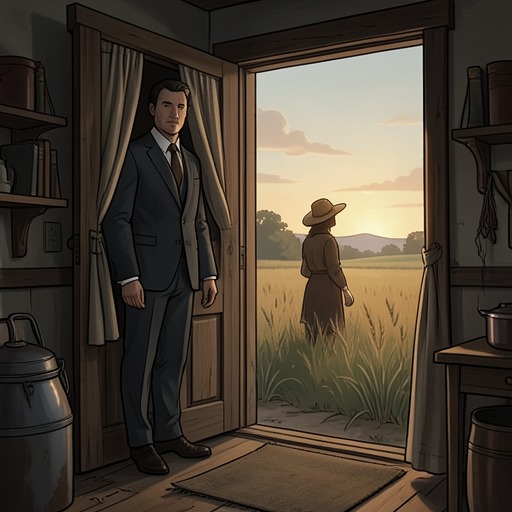
In June 1923, amid public suspicion that local authorities were colluding with the killers, Vaughan stood out as a former prosecutor committed to driving criminal influence from the region. He had worked closely with private investigators trying to solve the Osage murder cases. The danger around that work was not abstract: Vaughan had been gathering evidence and had arranged a hiding place for it, preparing his wife to retrieve the material and give it to authorities if anything happened to him.
The urgent call that set the final journey in motion came from a friend of Bigheart, who was suffering from suspected poisoning and had been taken to a hospital in Oklahoma City. Bigheart, a nephew of James Bigheart, said he had information about the murders but would speak only to Vaughan, whom he trusted. Vaughan’s wife had recently given birth to their tenth child. Before leaving for the hospital, he told her where he had concealed the evidence and that money for her and the children was there as well—a precaution that would give the later disappearance a chilling, practical meaning.
The Train Disappearance and Discovery
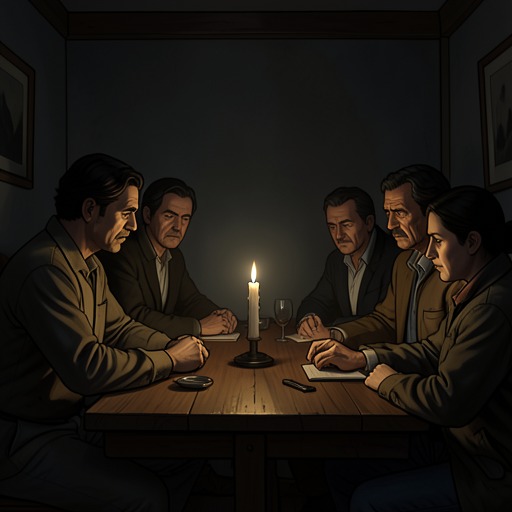
At the hospital, George Bigheart was still conscious. He motioned for the others in the room to leave and apparently gave Vaughan his information, including incriminating documents. Vaughan stayed beside him for several hours, until Bigheart was pronounced dead. He then called the new Osage County sheriff and said he had all the information he needed and was rushing back on the first train. When the sheriff pressed him about whether he knew who had killed Bigheart, Vaughan replied that he knew more than that.
Vaughan went to the station and was seen boarding an overnight train. But when it arrived the following day, he was gone. The Tulsa Daily World announced, “OWNER VANISHES LEAVING CLOTHES IN PULLMAN CAR,” and reported, “MYSTERY CLOAKS DISAPPEARANCE OF W. W. VAUGHAN OF PAWHUSKA.” The vanished attorney had been carrying the documents Bigheart had entrusted to him; the disappearance therefore threatened not only Vaughan but the investigation those papers might advance.
The search brought in bloodhounds, and Boy Scouts joined in—a striking response in Pawhuska, where the first Boy Scout troop in the United States had been organized in 1909. Thirty-six hours later, Vaughan’s body was found beside the railroad tracks, thirty miles north of Oklahoma City, Oklahoma. He had been thrown from the train, his neck broken, and stripped virtually naked, as Barney McBride had been. Bigheart’s documents were missing. When Vaughan’s widow went to the hiding place he had identified, it too had been cleared out, including the money meant for her and the children.
At the inquest, a prosecutor asked the justice of the peace whether Vaughan had known too much. The justice answered, “Yes, sir, and had valuable papers on his person.” The terse exchange linked the killing to the evidence Vaughan carried without establishing who had taken his life or removed the papers. Those questions remained central to the case.
Aftermath, Suspects, and Unresolved Questions
The killing’s consequences continued long after the train reached its destination. Vaughan’s widow, Rosa, was left to raise ten children without income. The family left its two-story house for a storage garage, and the Osage community helped feed them. Some of the children, including Martha Vaughan’s father, went to live with Osage families, where they spoke Osage and learned traditional dances; he later recalled feeling safe among them. The family’s private loss thus unfolded alongside the wider community’s effort to care for those left behind by the violence.
Decades later, Melville Vaughan brought two binders of family research to a meeting about his grandfather’s murder. They held faded newspaper clippings, Vaughan’s death certificate, and an informant’s statement that Vaughan had said shortly before his death that he had collected “sufficient evidence to put Bill Hale in the electric chair.” The family believed Hale had wanted Vaughan silenced, but still could not establish who had carried out the killing or precisely how. They questioned whether Vaughan had been killed before he was thrown from the train or died on impact. The inquest had listed the cause of death as unknown, a finding the family believed reflected interference by someone influential.
Later records pointed toward H. G. Burt, but did not settle the case beyond doubt. A newspaper account placed Burt aboard the train with Vaughan and said he reported Vaughan missing from his berth. A bureau informant, asked about Vaughan’s murder, replied, “I think Herb Burt pulled that.” A Fairfax town marshal’s interview notes also implicated Burt and said a local tough had helped him throw Vaughan from the train; the marshal reported that Burt considered fleeing during the bureau’s 1925 investigation and moved to Kansas that year. Other evidence tied Burt to George Bigheart’s affairs and showed that he had stolen money Bigheart intended for Vaughan. These leads supported suspicion, not a conclusive reconstruction of the murder.
The family’s attempts to pursue answers were themselves met with intimidation. After Hale went to jail, a relative who continued investigating received an anonymous warning that the family would end up like Vaughan if they kept pressing the case. They stopped. Martha’s older uncle later recalled the warning and remained frightened. The disappearance of the papers, the emptied hiding place, and the threat against the family left the murder not merely unsolved but actively difficult to investigate: even after the suspected perpetrators’ power had been challenged, the cost of asking who killed Vaughan remained palpable.
Jurisdiction and the Limits of Resolution
Vaughan’s murder unfolded within a legal landscape already made treacherous by William K. Hale’s influence. Federal prosecutors warned that trying Hale in Oklahoma’s state courts would be dangerous, yet the allotment of Osage land meant that many murders—including Anna Brown’s—could be prosecuted only by the state. The distinction was not a technical footnote: the legal status of the ground where a killing occurred could determine which government had authority to act, while corruption weakened confidence in the institutions available to pursue the crime.
The prosecution of Hale and John Ramsey for Henry Roan’s murder offered a rare federal route. Roan had been killed on an Osage allotment that had not been sold to white owners, and he was under federal guardianship; prosecutors therefore brought the case in federal court. The U.S. Supreme Court later ruled that the place where Roan was killed was indeed Indian land, restoring federal jurisdiction. That ruling helped the broader investigation proceed, but it did not recover the papers taken from Vaughan or establish who killed him. The contrast sharpens the case’s unresolved character: the law could clarify where a prosecution belonged, while the evidence needed to answer Vaughan’s murder had vanished.